



Development Mixology: Low-Code, Fusion Teams, and AI

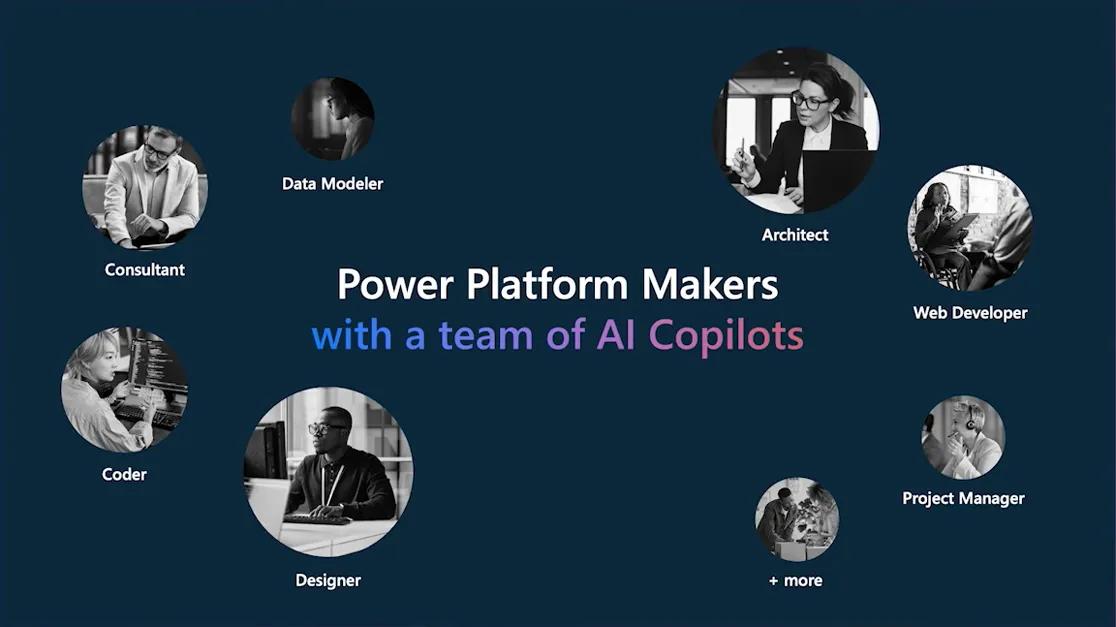
As an IT services provider that specializes in the rapid development of enterprise-grade solutions using the Microsoft Power Platform, customers often ask us about our secret formula. Although we have by no means mastered this formula, I thought I’d spend some time this week breaking down our approach and highlighting some of the key ingredients we’ve been slowly incorporating into our delivery model.

Embracing a DevOps Mindset for Low-Code Development
Whenever the topic of enterprise-wide low-code adoption comes up with customers, corporate IT teams naturally have a LOT of questions. From the perspective of an adoption maturity model, the conversation usually plays out like this:
Various pockets of the business experience some early victories with low-code development. For example, the finance department uses Power Apps and/or Power Automate to automate some basic month-end close processes.
After a few early wins, the business wants to push the envelope for innovation further by integrating with key business systems like SAP.
This crossover point prompts the IT department to step in and take a serious look at the Power Platform from an enterprise architecture perspective.
At this stage, it’s only natural that the IT team has some practical questions about how this style of development can scale. While the business is often full steam ahead, the primary objective of the IT team is to get some standards/procedures in place to enforce crowd control.
Key Concerns for Low-Code Adoption
Although more and more IT professionals seem to be coming around with low-code development, there’s still quite a bit of skepticism/doubt out there when it comes to wider-spread adoption across the enterprise. Some specific questions that we field from IT teams in this area include the following:
- Are you letting low-code developers or citizen makers touch mission critical systems like SAP or Workday?
- How often do you run into roadblocks with low-code tools?
- How much pro-code development is actually required?
- Are you actually getting any mileage out of AI-based productivity tools like GitHub Copilot?
- How does your team address key requirements around performance, reliability, and security?
- How do you keep projects from running off the rails?
- How do you support these projects after the fact?
These are all very valid questions, and in most cases, there are no simple answers.
Working Together: The DevOps Mindset
As a technology partner, we look at these types of issues from the perspective of a DevOps mindset. Even though we might be working with new types of development tools (e.g., Power Apps Studio), a DevOps mindset thinks more broadly in terms of a “…combination of practices and tools designed to increase an organization’s ability to deliver applications and services faster than traditional development processes” (Ref: Synopsys).
DevOps is all about figuring out how to separate development and operations tasks such that all the key players can play to their respective strengths. In other words, just because we bring business analysts and other citizen maker types into the development process doesn’t mean that we throw away decades’ worth of IT discipline and best practices.
Indeed, the best-case scenario for low-code development is that it provides IT teams with access to a broader pool of resources that they can collaborate with to keep up with demands from the business. The customers we see that are having the greatest amount of success here are the ones that have embraced this new form of partnership.
Moving Towards Fusion Teams
A couple of years ago, Gartner introduced us to the concept of fusion teams. According to Gartner, a fusion team is a “multidisciplinary team that blends technology or analytics and business domain expertise and shares accountability for business and technology outcomes.” Figure 2 below illustrates what fusion teams look like in the Power Platform space.

Depending on the complexity of your project, your fusion delivery team might consist of the following types of resources:
- Project managers
- Scrum masters & product owners
- Citizen makers / low-code developers
- Solution architects
- Technical architects
- Pro-code developers
- Data modelers
- Web & mobile app developers
- UX designers
- Domain/process experts
- IT system administrators
- Security specialists
- Subject matter experts (consultants)
- Change management specialists
Teamwork Makes the Dream Work
While these kinds of rosters can look scary, it’s important to note that fusion teams are all about efficiency through specialization. Whereas before, you might have sought out unicorn-style “full stack developers” to build an app from stem to stern, the fusion team approach takes more of an 80–20 (or sometimes 90–10) approach where low-code developers might do much of the heavy lifting and hard-to-find pro-code developers fill in the gaps.
Similarly, instead of having a backend developer struggle for days trying to build a modern UX, fusion teams would call on an experienced UX designer to develop a wireframe that developers could use as a prototype to build the real thing.
Overall, this approach helps you extend the reach of pro-code resources that are in limited supply. For example, instead of tying up a pro-code resource to work on a single project for 3–4 months, you can leverage that pro-code resource across several projects in parallel. In this scenario, the pro-code resource can focus on high value tasks that empower low-code developers to be more productive in their tasks.
To put all this into perspective, consider the fact that we had two small fusion teams deliver 12 projects at a customer within a single calendar year in 2023. These aren’t throw-away Power Apps mind you. We’re talking about complex, enterprise-grade solutions that integrate with multiple business systems.
Accelerating Productivity with AI & Copilots
The newest ingredient into this mix of late has been AI-infused copilots. On the low-code side of things, our team is using the Copilot for Power Platform to simplify the development of custom Power Apps, cloud flows in Power Automate, and even simple expressions based on Power Fx.
For our pro-code developers, the team is experiencing powerful productivity boosts working with tools like the GitHub Copilot and Copilot for Power BI and Copilot for Fabric. Besides providing a bit of tailwind in development efforts, these copilots have also provided another communication mechanism for our fusion teams to collaborate with one another.
To put this phenomenon into perspective, consider a fusion team tasked with building a model-driven Power Apps solution that deeply integrates with SAP. In this scenario, we have technical architects that speak Power Apps, C#, and ABAP (SAP’s proprietary programming language). For developers working in the middle of all this, these copilots make it possible to mentally translate between different programming languages using natural language prompts (e.g., “Write a method in C# to sort a collection using…”).
Although it’s still early days, these tools will only continue to help fusion teams increase development productivity.
Closing Thoughts
In his book, Thinking in C++, 2nd Edition (Eckel, 2000), Bruce Eckel asserted “…that the complexity of the problems you’re able to solve is directly related to the kind and quality of abstraction” you’re working with.
In the early days of computing, the types of problems we could solve were severely limited because it’s really hard to build business solutions using 1s and 0s. Productivity improved with the arrival of more expressive languages like C++, Java, and .NET, but it still required highly skilled specialists that were adept at translating business requirements in program code.
The recent low-code/no-code computing phenomenon has gone a long way towards bridging those gaps by leveling the development playing field a bit. Getting back to the conversation around the right development formula, we think the key is to use these leaps we’re seeing in abstraction layers (e.g., low-code development platforms, AI, copilots, etc.) as a way to drive improved collaboration within fusion teams.
As technical as software development is, the reality is that it’s more art than science. This means the right formula for your business is the one that fosters the most collaboration within your teams. The good news is that you have way more resources to work with (e.g., citizen makers, SMEs, and so forth). This is a great problem to have but, to be successful, we have to come up with ways to get those resources pulling in the right direction so that we can maximize on their abilities.
As always, we welcome your feedback and would love to learn more about your journey.