



Azure Integration Services — Why Azure Integration Services?
This article explains that Azure Integration Services provides a modern, cloud-native alternative to legacy middleware by offering scalable, flexible, and easy-to-use tools that simplify connecting systems, automating workflows, and enabling real-time, API-driven integration across the enterprise.

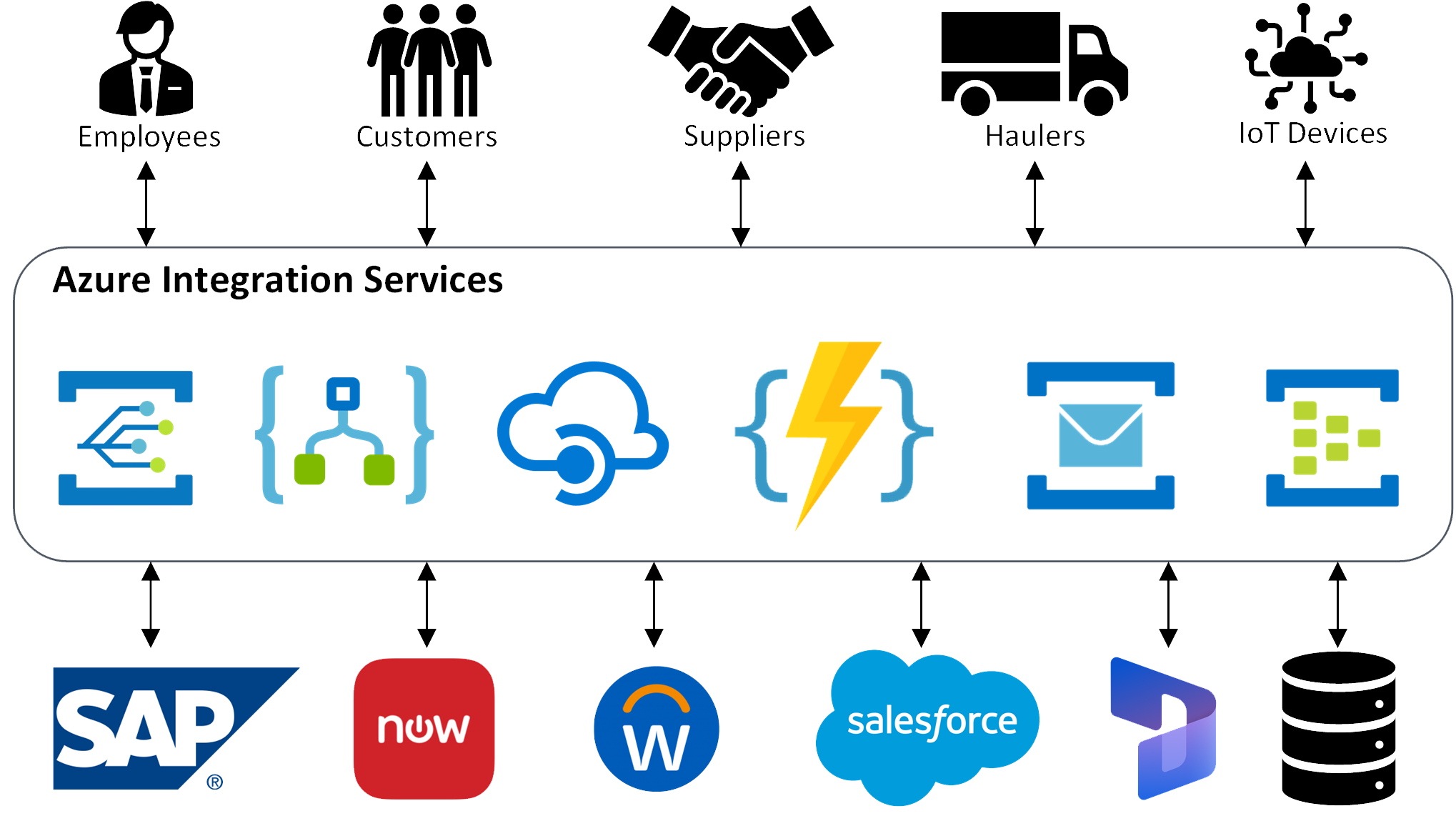
In this four-part blog series, we’ll be demonstrating why Azure Integration Services may be the best middleware you’ve never heard of. In our ever-evolving industry, businesses across the globe are constantly seeking ways to streamline their operations, enhance productivity, and gain a competitive edge. One of the key strategies to achieve this is by integrating various business systems and applications. In this blog post, we’ll explore why using Azure Integration Services with SAP can be a game-changer for your organization.
Integration lies at the heart of modern business operations. It allows disparate systems and applications to communicate seamlessly, ensuring that data flows effortlessly between them. For enterprises using SAP, integrating it with other systems can significantly enhance efficiency and decision-making capabilities.
Azure Integration Services is an Enterprise Integration Platform-as-a-Service (EiPaaS) solution from Microsoft that provides a robust and flexible platform for integrating SAP with a wide range of applications, services, and data sources.
10 Reasons Why You Should Embrace Azure Integration Services
Here’s my top 10 reasons why you should consider embracing Azure Integration Services to modernize your integration landscape:
- Seamless Connections: Azure Integration Services offers over 1,000+ pre-built connectors out of the box. These connectors greatly simplify the integration process. Plus, with Azure Logic Apps, you have a low-code, visual designer that makes it easy to use those connectors to create workflows and automate processes without extensive coding. This means that you can quickly and efficiently connect SAP to other systems such as CRM systems like Salesforce, legacy and home-grown databases, and even cloud applications such as Workday.
- Scalability: One word — infinite! As your business grows, so do your integration needs. Azure Integration Services scales with your business, ensuring that your integration solutions can handle increasing data volumes and transaction loads. This scalability is crucial for organizations with fluctuating demands as it enables them to only pay for the resources they actually use.
- Real-Time Insights: Integrating SAP with Azure PaaS services like Azure Functions and the Azure Event Grid enables real-time data processing at scale. This means that you can gain immediate insights into your business operations, empowering you to make data-driven decisions. For example, you can monitor inventory levels, track customer orders, and respond to changing market conditions in real-time.
- Security and Compliance: Microsoft Azure is known for its robust security measures and compliance certifications. When you use Azure Integration Services, you can rest assured that your SAP data remains secure and that your integration processes adhere to industry regulations and standards. This is particularly important for businesses in highly regulated sectors like healthcare or finance.
- Cost Efficiency: Azure Integration Services supports a pay-by-the-drink model, allowing you to only pay for the resources you actually use. This cost-efficiency is particularly advantageous for small and medium-sized businesses as it eliminates the need for substantial upfront investments in integration infrastructure.
- Rapid Development: Logic Apps’ low-code/no-code approach empowers business analysts and subject matter experts to participate in integration projects, reducing development time and costs. In addition, Azure supports a BYOL (Bring Your Own Language) model allowing for much more developer flexibility.
- Hybrid Integration: Azure Integration Services supports hybrid integration scenarios, meaning you can seamlessly connect on-premises SAP systems with cloud-based applications. This flexibility is ideal for organizations with a mix of legacy and modern systems.
- B2B Integration: For businesses engaged in B2B transactions, Logic Apps provides B2B capabilities for secure partner onboarding, message exchange, and EDI (Electronic Data Interchange) support. This simplifies collaboration with external partners and suppliers.
- Built-In API Management: Azure API Management simplifies the entire API lifecycle, from up-front design to deployment and management. It enhances security, performance, and developer experience while offering valuable insights through analytics and monitoring.
- Serverless Computing: While this could be its very own blog post and encompasses many of the benefits we’ve already discussed, the main benefit as we see it is no server management. Serverless means you don’t need to worry about server provisioning, configuration, or maintenance. Azure handles all the infrastructure management tasks, allowing you to focus solely on developing and deploying your workflows.

Conclusion
Whether you’re looking to automate processes, gain real-time insights, improve collaboration with partners, or simply streamline your operations, Azure Integration Services offers the tools and capabilities needed to achieve these objectives.
By leveraging Azure’s scalability, security, and cost-efficiency, you can unlock the full potential of your SAP system and drive your business towards a more agile and data-driven future. In my next post, we’ll dig deeper with Azure Integration Services and explore its robust array of integration options.